TOP-RATED
Atlanta Criminal Defense
Law Firm
Atlanta Criminal Defense
Law Firm





By: Cory Yager, Ex-Cop, Legal Book Co-Author, DUI Lawyer and BUI Attorney and a Full-Time Georgia Lake Resident
If you were arrested for boating under the influence in Georgia, Kohn & Yager LLC can help. Our firm defends boaters cited for BUI by Georgia DNR officers on lakes and rivers statewide. BUI is prosecuted under boating under the influence. The law sets a 0.08 grams percent blood alcohol concentration threshold for adult vessel operators. Our firm also handles the boating violations that often come with a BUI stop. These include missing life jackets and improper navigation lights.
Most Georgia BUI arrests are made by Georgia Department of Natural Resources officers. County, city, and Georgia State Patrol officers make the rest. Many arrests happen at boat ramps. Officers wait there to catch boaters before they leave the water.
Georgia boating laws look a lot like Georgia DUI laws. They differ in wording and penalties. Both laws cover operating under the influence of alcohol or drugs. The legal BAC for a Georgia BUI is 0.08 grams percent under Georgia law. This matches the DUI threshold on roadways.
Many people ask if they can drink and drive a boat. If a DNR officer sees you operating a vessel while drinking from a can with a visible brand label, your boat will be stopped. It will be boarded.
Georgia's lakes and rivers see heavy boat traffic each season. These include Lake Lanier, Lake Allatoona, Carter's Lake, Lake Blue Ridge, Lake Hartwell, Lake Sinclair, Lake Oconee, Lake Burton, Lake Jackson, and Lake Nottely. Georgia DNR patrols these waters. Officers watch for unsafe boating and impaired boaters.
Boating under the Influence is a misdemeanor or felony crime in Georgia. Since May 15, 2013, felonies for repeat offenders became possible. Before then, 15 years in state prison was reserved for a boating death. A BUI crash causing serious injury carries one to five years.
A conviction becomes part of the GBI and GCIC records for that offender. An arrest brings fingerprints and a mug shot. Those records go to the NCIC, run by the FBI. Some defendants contest these charges through bench trials. In a bench trial, a judge alone decides the outcome.

A common question is whether you can get a DUI on a boat. The answer is no, because Georgia charges impaired vessel operation under its boating law. A BUI suspension reaches your privilege to operate a vessel, not your driver's license. Georgia's motor vehicle crime can only happen on land or on a highway. Many states use one DUI or DWI crime for air, water, or road. Georgia's Legislature has always kept the crimes separate, so DUI charges and BUI charges are handled apart.
Boat operators need to know Georgia's boating rules and safe boating habits. That knowledge cuts the chance of a stop by Georgia DNR or sheriff's boat patrols.
Georgia boating law differs from traffic law in a key way. Motor vehicles on roadways require articulable suspicion of a crime or equipment defect before being pulled over. Georgia's boating statute itself authorizes enforcement officers to stop and board any vessel to inspect it for compliance. Georgia DNR and local police rely on that inspection power when they turn on blue lights on a lake or navigable river. A vessel underway must stop when hailed. They can run random safety checks of boats and passengers for flotation devices. The boating statute requires no articulable suspicion or probable cause for that inspection. Whether a given boarding stayed within it can still be challenged.
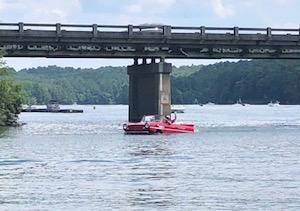
A routine equipment citation can turn into an impaired-operation case. Here is how that happens. DNR officers patrol Georgia waters looking for common violations. These include no-wake zone infractions, missing or expired personal flotation devices, improper navigation lights, reckless vessel operation, unregistered boats, and insufficient onboard safety equipment. Any of these gives an officer reason to contact the operator.
Once alongside the boat, an officer who smells alcohol may push the stop further. The officer looks for signs of impairment. These include slurred speech, poor balance on a moving deck, or slow response to commands. The stop may then turn into a full BUI investigation under Georgia law.
Unlike roadway DUI stops, the boating statute lets DNR come alongside and board your vessel for an inspection. The facts that beat a BUI charge often run through the boating-violation citation itself.
Hiring boating while intoxicated attorneys who defend both the boating violation and the BUI charge together may strengthen your defense. The equipment citation and the impairment charge often stand or fall on the same facts.
The key facts include the reason for the officer's first contact. They include the officer's training in boat-based field sobriety tests. How well balance and coordination tests work on a rocking deck matters too. Weak spots in one charge may sap the other.
Georgia boating laws do not ban beer on a boat or other drinking on a boat. But when a boat is under power and moving, the operator faces rules much like the road rules on drunk driving. If too much alcohol has been drunk, a BUI charge may follow.
Georgia boating laws set zero tolerance for operators under age 21. A DNR ranger will not let you keep running the boat if you show alcohol in your system. That holds even if you are not ticketed for a boating DUI. A boater under 21 who refuses testing faces a one-year suspension of the privilege to operate a vessel. The same one-year suspension applies to a boater under 21 who registers 0.02 grams or more.
For adult operators age 21 and older, the legal limit under Georgia law is 0.08 grams percent alcohol concentration. For operators under 21, the threshold drops to 0.02 grams percent. Any amount above those levels may support a BUI charge, depending on the facts of the stop.
DNR officers watch for signs of impairment on the water. One is trouble keeping balance while the boat rocks. Another is fumbling with dock lines or papers. Slow or confused answers to routine commands count too. So do open containers within the operator's reach. Field sobriety tests built for solid pavement often give bad results on a moving deck. That gap can open a defense.
One common myth involves passing the helm. Handing the operator role to a sober person before you start drinking is legal. But that does not shield the first operator from a BUI charge. Proof that boating while intoxicated happened during earlier operation of the vessel still counts.
Follow all local laws to cut your chances of contact with Georgia DNR and sheriff's patrols. Pull into a cove, drop anchor, and shut down the motor before any party starts. Keep all boat lights in working order and in the right spots. Use them when the light is low. Make sure your boat is registered and marked before you launch.
Have you been arrested for a BUI in Georgia? Our three Georgia BUI lawyers – Larry Kohn, William Head, and the author Cory E. Yager – can help you. Our lawyers travel statewide across Georgia.
Georgia law requires a written request for a hearing on your boating privilege suspension within ten business days of the suspension notice. Do not delay in seeking legal help. Call (404) 567-5515 to speak with a Georgia criminal defense attorney. Our office is available 24 hours a day, 7 days a week. Call the award-winning law partners at Georgia Criminal Defense to protect your legal rights.

A BUI charge in Georgia moves fast. DNR reports, breath or blood test results, and vessel-stop paperwork all need early review. That review is where defenses turn up. Kohn & Yager LLC offers free consultations 24 hours a day, 7 days a week at (404) 567-5515.
Our firm defends both the boating violation citation and the BUI charge together. Every part of the stop gets looked at as one.
When you call, have your citation handy. Have any DNR paperwork from the scene. Have your boat registration. Those papers help us weigh the facts right away. Georgia law requires a written request for a hearing on your boating privilege suspension within ten business days of the suspension notice. Do not delay. Call (404) 567-5515 to discuss your BUI case with a Georgia defense attorney.
Is a BUI in Georgia a misdemeanor or a felony? A first or second BUI conviction within ten years is a misdemeanor, and a third is a high and aggravated misdemeanor. A fourth or subsequent conviction within ten years – measured from arrest dates – may be charged as a felony. Penalties go up with each offense. They include higher fines, longer jail time, and more community service. Talk with a Georgia BUI defense attorney about the facts of your own case.
What is the legal BAC limit for operating a boat in Georgia? Under Georgia law, the legal alcohol concentration limit for adult vessel operators is 0.08 grams percent. Operators under age 21 face a lower threshold. A BAC between 0.05 and 0.08 grams does not create a presumption of impairment or sobriety. It may still be used as evidence, depending on the facts of the stop.
Can DNR officers stop my boat without probable cause? Yes. Georgia's boating statute lets DNR officers and local marine patrols stop and board your vessel to inspect it for compliance. They need no articulable suspicion and no probable cause, which is not how a roadway traffic stop works. They may run random safety checks for flotation devices, registration, and required equipment on any navigable Georgia waterway. A routine safety boarding can lead to a BUI investigation if the officer observes signs of impairment.
Do I need a boating violations and B.U.I. attorney if I was only cited for one boating violation? Even one boating violation citation may be worth a legal review. Equipment and rule citations can carry fines and create a record of the stop. That record could come up later. If alcohol was present during the stop, the facts in the citation could support more charges later. An attorney who handles both boating violations and BUI cases can check whether the citation was properly issued. The same lawyer can check whether your rights were protected.