TOP-RATED
Atlanta Criminal Defense
Law Firm
Atlanta Criminal Defense
Law Firm




In Search of the Right Probation Violation Lawyer. In Georgia, criminal courts may grant probation instead of jail time. Most of these cases come from a "negotiated plea." The plea may be to the charge as first accused. It may also follow a drop down to a lesser offense. This applies to people found guilty in court. It also applies to people who admit guilt or plead "no contest." The case may be a DUI probation violation. It may be felony probation jail time on a drug possession charge. It may be a misdemeanor probation violation warrant. This page explains what happens when a probation officer files a violation of probation warrant, and what a Georgia probation violation can cost you. Most potential clients focus first on probation revocation jail time. Some ask us right away, "can a probation violation be dismissed?" Others ask, "what are my felony probation rights in GA?" When you call our office, we will need your prior "plea paperwork." That paperwork shows all of the conditions of probation. Your prior sentencing ended with a court order setting out "conditions of probation." We will study your facts to see if this is a technical violation of probation. Whether the VOP is a misdemeanor or felony probation violation issue also matters a great deal. See our related guide: How to Bail Someone Out of Jail in Georgia: A Step-by-Step Guide.

A probation violation happens when someone on a probated sentence fails to follow a condition the sentencing judge imposed. Court staff shorten it to a prob violation. Paperwork abbreviates it as a VOP. The meaning of probation violation is narrow, and the violation of probation meaning is the same thing said the other way round. A violation is a breach of a court order you already serve under, not a new crime by itself.
Georgia courts sort these allegations into two groups. A technical violation breaks a rule of supervision. Missing a reporting appointment counts. So does falling behind on fines, fees, or restitution. Failing or missing a drug or alcohol screen counts as well. Leaving the jurisdiction without permission is another. So is not finishing community service or a required class. A substantive violation means a new criminal offense charged while on probation.
Your conditions come from two places. General conditions of probation apply to nearly everyone on probation. Special conditions are added case by case by the sentencing judge. Those appear in the probation order itself. You may violate either one.
Who supervises you matters too. Felony probation runs through the Georgia Department of Community Supervision. Misdemeanor probation is frequently supervised by a private probation company under Georgia law. That changes who reports a problem and how fast it reaches a judge.
Probationers should pull their own sentencing order before assuming anything. The conditions on that document, not general information, define a violation in your case.
Clients ask us every week what happens if you violate your probation. The answer is a sequence, not one event.
Your supervision officer or private probation company first documents the alleged violation. A minor lapse may bring only an informal warning. The officer may instead file with the court. That filing is a petition or affidavit for revocation. It lists each condition the State claims you broke.
The judge reviews the petition and may issue a probation violation warrant. Many people learn of a violation only when the warrant appears. Do police come get you on a VOP warrant? Sometimes, yes. Arrests happen at traffic stops, at home, and at routine reporting visits.
Bond is the next question. A judge has discretion to deny bond on a probation warrant. Being held until the hearing is a real possibility.
Then comes the revocation hearing, which many people call a probation violation hearing. Most readers do not know that the hearing is not a trial. No jury sits. The State must prove the violation only by a preponderance of the evidence, not beyond a reasonable doubt. Cases that would be defensible at trial can still end in revocation. You still have rights. Those include notice of each alleged violation and a chance to be heard. You may present evidence and witnesses. You also have the right to a lawyer.
Probationers should act the moment a problem appears. Skipping the next reporting appointment makes matters worse. Discussing the allegation with your officer before speaking with counsel can also hurt a case. Payment receipts, class certificates, negative screens, pay stubs, and medical records all help. A lawyer can sometimes address a warrant before an arrest happens.
Probation violation consequences in Georgia cover a wide range. Many cases end short of confinement. Jail is not automatic.
A judge may continue probation exactly as it stands. The court may issue a warning. The court may add conditions such as increased reporting, a clinical evaluation, a curfew, electronic monitoring, or extra community service. The court may extend the term. It may also revoke part or all of the balance.
The question we hear most is how much time do you get for a probation violation. Georgia's probation revocation statute sets the ceiling. The limit depends on the allegation. For a technical violation, a court may generally revoke no more than the lesser of the balance of probation or two years in confinement. Violating a special condition may expose the balance of the probated sentence. So may committing a new felony while on probation.
Probation violation jail time is also limited by your original sentence. Revocation does not create new time beyond what the judge first imposed. A probation violation sentence is carved out of the balance you still owe. That is why identical allegations can produce very different exposure.
Judges weigh practical factors. Those include how far into the term the violation occurred and whether you have violated before. The court also asks whether the conduct was willful and whether you self-reported. Work, treatment, and family obligations matter as well.
Inability to pay deserves its own answer. Georgia courts must consider whether a failure to pay was willful before revoking on that basis. Documented job loss, medical hardship, or partial payments matter. Every figure above depends on your individual sentence and your judge's discretion.
A first technical violation, reported early and cured quickly, is often resolved without revocation. Judges in Atlanta-area courts frequently modify conditions or order a clinical evaluation. They may also reinstate probation with a warning when the person has otherwise complied.
A probation violation 2nd offense changes the calculation. Willfulness gets harder to argue. The court has already extended leniency once. Prosecutors are more likely to seek revocation of a substantial part of the balance.
Drug screens follow the same pattern. A first failed screen often opens the door to a treatment-based resolution. That may mean a substance abuse evaluation, outpatient or inpatient treatment, or an accountability court track. Repeated positives read as a pattern.
A new arrest sits in its own category. A new arrest is not a technical violation, even when it is your first problem on probation. It can trigger the new case and the revocation at once. A second DUI arrest while on probation, for example, brings both a new prosecution and a violation of probation.
These cases are handled very differently from courtroom to courtroom across Fulton, DeKalb, Cobb, Gwinnett, and Clayton counties. Familiarity with the judge and the supervision office matters.
A probation violation is generally not a separate criminal charge in Georgia. The proceeding enforces a sentence you already serve. By itself it adds no new felony or misdemeanor conviction to your record.
Our video on what happens when you violate probation for a misdemeanor walks through the same ground. The confusion comes from where the proceeding gets its character. On felony probation, you face a felony probation violation proceeding with felony-level exposure. On misdemeanor probation, your exposure is capped by the underlying misdemeanor sentence. That sentence generally runs up to twelve months per count.
A violation that is itself a new crime is different. A new obstruction charge, a new DUI on probation, or a new drug possession charge is prosecuted on its own track. Each is charged as its own misdemeanor or felony, in addition to the revocation.
Felony terms commonly run for years rather than months. Many eligible felony sentences carry a behavioral incentive date. That date allows early termination for people who stay compliant and keep restitution current. Probationers should have the sentencing order reviewed before drawing conclusions about exposure.

Probation beats prison, but it carries real obligations. Judges set rules for how you must behave while you are out. Those rules may be delivered verbally, in writing, or both. If the State establishes a violation, the court may revoke probation and require you to serve the remainder of the sentence.
A written copy of every condition is the place to start. Verbal conditions are harder for the State to enforce and harder for you to defend against. That is one more reason to have a lawyer read the written order at the start of probation, not after a warrant issues.
Documenting everything as it happens protects a probationer. Save receipts for every payment and certificates for every class. Keep results from every screen and signed logs for community service. A change of address or job should be reported before the deadline, not after. Travel calls for permission in writing, and out-of-state work should be raised early.
A scheduled screen may conflict with a prescription. The prescription documentation should come to the appointment rather than wait for a positive result.
The day you realize you missed something, your lawyer should hear it first and your officer second. Self-reporting generally lands better than letting the officer discover it. Ignoring the problem is the worst option. Kohn & Yager LLC offers a free consultation by phone, video, or in person.
The first question is whether the violation happened at all. On a positive screen, that means chain of custody and confirmation testing. On a missed appointment, it means records showing the visit was rescheduled or the officer was unavailable. Employment records showing a shift change often explain an absence that looks willful on paper. On money allegations, receipts can close the issue.
The second question is willfulness. Failure-to-pay and failure-to-complete allegations often turn on hardship, hospitalization, lost transportation, or job loss rather than defiance. The third angle is notice. A petition that never specifies which condition was violated gives the defense something to challenge.
Much of this work happens before anyone stands in front of a judge. Negotiating a disposition with the supervision officer and prosecutor is often more productive than litigating. Mitigation is its own workstream. It includes proof of employment, treatment enrollment, and negative screens since the allegation. Letters of support help. So does a concrete compliance plan the judge can adopt as modified conditions instead of confinement. Sometimes the better path is a negotiated modification, a change in supervision level, or early termination once the balance is cured.
Kohn & Yager LLC has handled probation and revocation matters in Atlanta metro courts for decades. No lawyer can promise a result. Early advocacy still changes what the court has in front of it.
Defense of a violation of probation can be handled "pro se," which means using no lawyer and representing yourself. A public defender may take the case if you are indigent. Private legal counsel is the third option. Anyone who cannot afford legal fees should request appointed counsel before the revocation hearing. In Georgia, probation is a three part process. A Georgia probation revocation hearing only comes after an alleged violation of probation. Usually, but not always, the probation officer has told the probationer that something was not done on time or fully satisfied.
The three steps of revocation of probation run in order. First comes the discovery of a new arrest. It may instead be the officer's evaluation of a technical probation violation. The officer then lists the "probation violation PC," or probable cause, issues. Those may include not reporting when scheduled. They may include late payments or no payments at all. Leaving the jurisdiction without permission is another. Second comes a hearing before a judge. Third comes the decision about how the alleged probation violation should be "handled."
Dealing with a first probation violation warrant. The probation officer draws up a violation of probation warrant, using a template that the prosecutor's office has approved. A probation violation 1st offense has a higher chance of ending with no jail time. Repeat issues before the same judge carry more risk. Some people are struggling with addiction issues. If our client needs alcohol or drug treatment, that may be one way we can defend your probation violation, since addiction is a disease.
Finding a violation is the first stage in the procedure. The probation officer, or another appointed prosecuting authority, investigates and decides whether the person on probation broke any probationary rules. That can entail gathering data, speaking with witnesses, and studying records. Our probation violation lawyers will explain what happens if you have a warrant for breaking probation. We will also explain how to resolve the violation. The first probation violation is easier to handle. Judges will not accept the same excuse again, such as not meeting the probation officer as scheduled.
Cost should not be the reason someone stands at a revocation hearing alone. A request for appointed counsel should go in writing and be filed early. An appointment granted after the hearing date does not help. Kohn & Yager LLC can also structure fee arrangements and monthly payment plans. Ask about payment options during your free consultation.

Do you automatically go to jail for violating probation? In most cases, no. The consequences section above lays out the range of outcomes.
A missed meeting can be a violation, because reporting as directed is a standard condition. In practice, a single missed appointment on an otherwise clean record is often handled informally. Calling the officer the same day helps. Depending on your judge and your conditions, a documented reason may resolve it without a filing.
You do not have to be convicted first. The standard at a revocation hearing is a preponderance of the evidence. A judge may find a violation based on the conduct while the new case is still pending. Counsel will often ask the court to wait for that case to resolve.
Leaving the jurisdiction without permission is typically a violation on its own. An out-of-state arrest is usually reported back to your officer. Interstate transfers exist, but they take approval in advance.
Probationers should speak with a lawyer first. Statements to a supervision officer are routinely used at the revocation hearing. In most cases you need not explain yourself before you have counsel.
An outstanding VOP warrant does not improve with time. A judge may deny bond on a probation warrant. Waiting can mean sitting in custody until the hearing date.
The window before that hearing is when the work gets done. Compliance evidence, treatment enrollment, employment records, and a mitigation plan must be assembled while there is time to present them.
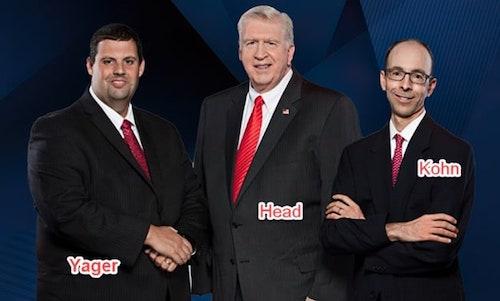
Larry Kohn and Cory Yager of Kohn & Yager LLC have handled probation revocation hearings in metro Atlanta for decades. That work includes the Fulton, DeKalb, Cobb, Gwinnett, and Clayton county courts. The firm offers a free consultation and answer the phone 24 hours a day at (404) 567-5515. We cannot promise a dismissal or a particular sentence. We can intervene early, argue your case, and assess your exposure honestly.

Any failure to follow a general condition of probation may count. So may a failure to follow a special condition in your sentencing order. That includes missed reporting, unpaid fines or restitution, failed screens, unapproved travel, and new charges.
No, jail is not automatic in Georgia. A judge may reinstate probation, add or modify conditions, extend the term, or order confinement. Where you land depends on the type of violation, your record on supervision, and your judge.
For a technical violation, Georgia law generally limits confinement to the lesser of the balance of probation or two years. Violating a special condition may expose the full balance. So may committing a new felony while on probation.
Jail is not automatic on a first violation. A first technical violation that is promptly reported and cured is frequently resolved with modified conditions, an evaluation, or a warning. Outcomes still depend on the facts and the court.
Yes, a nonpayment allegation can lead to a warrant. Georgia courts must consider whether the failure to pay was willful before revoking on that basis. Proof of job loss, medical bills, or partial payments matters.
If the probation you are on is for a felony rather than a DUI, see violating probation with a felony for the revocation rules that apply there.