TOP-RATED
Atlanta Criminal Defense
Law Firm
Atlanta Criminal Defense
Law Firm




How much jail time for a probation violation in Georgia depends on what kind of violation the judge finds. A court may revoke part or all of the probation you have not yet served. A technical violation of a felony sentence generally carries up to two years of confinement. Violating a special condition or committing a new offense can expose the entire remaining balance under Georgia's probation revocation statutes.
This page focuses on one common situation. You are already on probation from an earlier case, and you pick up a new Atlanta DUI arrest in Atlanta. That arrest creates two problems at once. You face the new charge, and you face revocation of the sentence you are still serving. A new arrest significantly increases the risk of confinement, and judges frequently impose jail time in these cases. Prior DUI convictions – including a third DUI – also raise the stakes, because a fourth DUI within ten years is prosecuted as a felony.
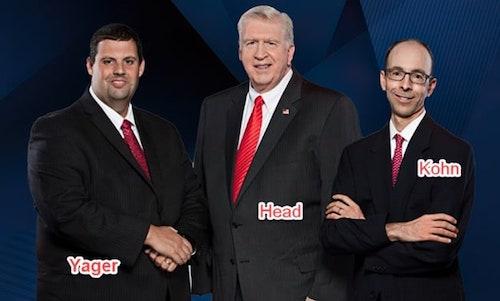
Former police officer Cory Yager and criminal defense lawyer Larry Kohn, partners at Kohn & Yager LLC, have handled DUI and probation revocation matters in metro Atlanta courts for decades. They also co-author Georgia's leading book on DUI law. What follows explains how revocation works, what a judge can and cannot do, and what changes the result. Nothing here predicts an outcome in your case. Past results do not guarantee a similar outcome.

Georgia judges do not sentence a probation violation as if it were a new crime. The judge instead revokes some or all of the probation time you have not yet served. Georgia limits violating probation jail time to the balance you still owe on that sentence. If you have eight months left, eight months is the most the court can take.
Georgia law on probation revocation sets the limits. For a technical violation of a felony probation sentence, the statute generally caps confinement at two years. For a violation of a condition the sentencing court expressly designated as a special condition, or for a new offense, the court may revoke the full remaining balance. So the honest answer to how much time do you get for violating probation turns on the type of violation and the length of your unserved term. How long do you get for violating probation is not a fixed number, and it never resets to a full new sentence.
The proof standard matters just as much. The State must prove a violation only by a preponderance of the evidence. That means more likely than not. A criminal trial requires proof beyond a reasonable doubt. Because the bar is so much lower, revocation hearings are lost far more easily than trials. That gap explains why so many people ask how long can you go to jail for violating probation after a case they expected to win.
Results vary depending on the judge and the county. In many Fulton County cases, the court looks closely at what the defendant has done since the violation before deciding on confinement. Judges in neighboring State Courts weigh the same facts differently. No lawyer can promise a specific outcome, and you should treat any promise of one as a warning sign.
A technical violation is a breach of the supervision rules. Missing a probation appointment, failing or skipping a drug or alcohol screen, falling behind on fines and fees, leaving community service unfinished, or not completing DUI school all qualify. A substantive violation is new criminal conduct, such as a second DUI arrest.
The distinction drives your exposure. Technical violations of a felony sentence run into the statutory confinement cap. A new offense can put the whole unserved balance on the table, so the punishment for probation violation is far steeper.
Can you go to jail for missing a probation appointment in Georgia? Yes. A probation officer may seek a revocation warrant for any breach of the reporting condition. In practice, many judges answer a first missed appointment with a warning, longer supervision, or added conditions. Still, the penalty for violating probation always rests with the court.
A Georgia misdemeanor DUI conviction usually carries a 12 month sentence. Most of that term is served on probation after any mandatory jail credit. So the most a judge can revoke is what remains of those 12 months. People searching "1 year probation how much jail time" or "how much jail time for probation violation" often expect a fresh year of confinement. Someone nine months into a one year DUI probation term faces roughly three months of exposure instead.
Felony probation works differently. Multi-year balances mean far greater exposure, and the two year technical violation cap becomes the operative limit. That is why how much time can you get for violation of probation depends first on your sentence type. A defendant on federal probation for a felony who picks up a Georgia State Court DUI also faces a separate federal revocation process on top of the state case.
The process follows a predictable path. Your probation officer documents the violation first. The officer then files a petition to revoke or asks the court for a revocation warrant. If a warrant issues, you may be arrested and held until the hearing. The judge then decides the sanction.
Georgia sets no fixed number of violations before jail becomes automatic. There is no three strikes rule. One serious violation, such as a new DUI arrest, can trigger revocation the very first time. Several minor technical slips may draw nothing more than added conditions.
So can you violate probation and not go to jail? Yes, and it happens regularly. Judges have a full menu of alternatives. They may extend the probation term, move you to a stricter reporting status, order a clinical evaluation and treatment, require a residential substance abuse program, increase screening frequency, order electronic or continuous alcohol monitoring, or add community service hours.
What you do before the hearing changes the picture. A defendant who arrives having already completed a substance abuse evaluation, started treatment, caught up on fees, and finished outstanding community service gives the judge a reason to consider something other than confinement. Waiting for the court to order those steps wastes the strongest argument you have.
A second violation on the same sentence narrows a judge's patience sharply. Courts read the first sanction as a warning that went unheeded. Confinement becomes more likely, and how long can you stay in jail for violating probation then depends on the balance left on the sentence. Every case still turns on the sentencing judge and the county.
The court's response to a new arrest depends on what the earlier probation was for. Federal felony probation and state DUI probation move on separate tracks, and a State Court DUI may carry different weight in each. Whatever the underlying case, the revocation process follows Georgia's revocation procedures.
It starts with the warrant. A probation officer applies for a revocation warrant, and a judge signs it. Once the warrant issues, officers may arrest you and hold you pending the hearing. Bond on a probation warrant is discretionary, not automatic. Some judges set a bond, and others hold the defendant until the case is heard.
How long can you be held on a probation violation? Georgia law requires a hearing within a reasonable time, and courts often schedule one within a few weeks of arrest. Delays happen when the new criminal case is still pending. Your lawyer can push for an earlier setting or ask for a bond hearing.
The hearing itself is not a trial. There is no jury. The judge hears the evidence and decides. The State must prove the violation only by a preponderance of the evidence. You have the right to counsel, the right to present evidence and witnesses, and the right to cross-examine the State's witnesses.
The court's options run from taking no action to revoking the full balance the statute allows. In between sit extended supervision, treatment, monitoring, and short periods of confinement. Across Fulton County and the surrounding metro State Courts, outcomes vary meaningfully from bench to bench. That variance is the honest reason to have counsel who appears before your judge regularly.
Typical conditions of probation after a DUI conviction include suspension or revocation of the driver's license, no alcohol use, no drugs without a prescription, random screens, community service hours, DUI school, reporting to probation as directed, and a clinical alcohol and drug evaluation with any recommended treatment. Each condition creates its own way to violate.
Can you drink on probation for a DUI in Georgia? If your sentence includes an abstinence condition, then no. Any consumption is a violation, even one drink at home. Screens catch it. Standard urine tests, EtG testing that looks back several days, and continuous alcohol monitoring can detect drinking well after the fact.
Alcohol monitoring on DUI probation usually takes one of two forms. An ankle device samples perspiration around the clock and reports drinking events. A home or handheld breath unit requires tests on a set schedule with photo confirmation. Either device creates a dated record the court can read at the hearing.
Driving is the other common question. A DUI conviction suspends your license, so driving during that suspension is a new offense and a violation at the same time. Depending on the offense number and your record, you may qualify for a limited driving permit or an ignition interlock permit. Apply before you drive, never after.
Missed screens, unpaid fees, unfinished community service, and skipped DUI school classes each supply an independent basis for revocation. Conditions are set by the sentencing judge and vary by court, so your own sentencing sheet controls. Read it, and ask your lawyer about anything you do not understand.

Many people assume a dismissal ends the probation problem. It often does not. Revocation requires only a preponderance of the evidence. A judge may find a violation based on the conduct behind an arrest even after the new DUI charge is dismissed, reduced, or tried to a not guilty verdict. The two proceedings apply different standards and reach their own conclusions.
That difference shapes strategy. Defense counsel often works to delay the revocation hearing until the new case resolves. An acquittal does not automatically cure the violation, but it is powerful evidence at a revocation hearing. A dismissal based on a bad stop can undercut the State's proof in both forums at once.
There is a second problem to plan around. Your conditions can be violated independently of the new charge. The fact of a new arrest may breach a condition on its own. So can the drinking that preceded it, if your sentence bars alcohol. A court could find either one proven regardless of how the DUI case ends.
What a judge does with that finding varies depending on the judge and the evidence presented. Some courts treat a dismissed charge as a reason to impose conditions rather than confinement. Others focus on the underlying conduct. Ask your lawyer how your assigned judge handles the sequence before you decide which hearing to fight first.
A probation violation after a new DUI arrest is not a wait and see situation. A revocation warrant can put you in jail before any hearing takes place. Early intervention is what keeps that from happening.
The steps taken before the hearing change what the judge sees. Arranging a medical or psychological evaluation, entering treatment, finishing outstanding community service, and catching up on payments give the court real alternatives to confinement. Judges respond to progress that is already underway. Outcomes still differ from judge to judge across Fulton County and the metro Atlanta courts, which is why knowledge of the specific bench matters.
Kohn & Yager LLC has handled DUI cases and probation revocation hearings in these courts for decades. Our attorneys will pursue every available defense and work to protect your rights at the revocation hearing. Past results do not guarantee a similar outcome, and every case depends on its own facts.
Call (404) 567-5515 for a free consultation. Callers often ask what a DUI attorney near me costs before they hire anyone, and we answer that on the first call. Our team answers 24/7, so call now and start building your response to the violation.

The court may revoke part or all of the probation you have not yet served. A technical violation of a felony sentence generally carries up to two years of confinement. A special condition violation or a new offense can expose the full remaining balance. Your ceiling is your unserved time, and the actual sanction depends on the sentencing judge and the county.
Yes. Georgia judges regularly impose alternatives instead of confinement. Common options include extended probation, stricter reporting, a clinical evaluation and treatment, a residential substance abuse program, more frequent screens, alcohol monitoring, and added community service. Your position improves when you correct the problem before the hearing. Nothing is guaranteed, and the decision rests with your judge.
Georgia sets no fixed number. There is no three strikes rule. A single serious violation, such as a new DUI arrest, can bring revocation the first time. Several minor technical violations may draw only added conditions. A second violation on the same sentence usually makes confinement more likely, because the court already gave one warning.
Yes. Missing a scheduled appointment breaks the reporting condition, and your probation officer may seek a revocation warrant. Many judges answer a first missed appointment with a warning, longer supervision, or added requirements rather than jail. Repeated failures to report change that quickly. Call your officer and your lawyer the same day you miss one.
If your sentence includes an abstinence condition, no amount of alcohol is allowed. Random screens, EtG testing, and continuous alcohol monitoring can detect drinking days later. A positive result is a violation even without a new arrest. Conditions come from your sentencing order, so check your paperwork and ask your lawyer what yours requires.
Felony probation follows different revocation rules than DUI probation. Our page on violating probation with a felony covers them.