TOP-RATED
Atlanta Criminal Defense
Law Firm
Atlanta Criminal Defense
Law Firm





Nolo contendere is Latin for "I do not wish to contend." Courts and lawyers commonly call it a no contest plea. A defendant who pleads nolo contendere accepts the court's punishment without admitting guilt. Readers often ask what does nolo stand for, and that Latin phrase is the whole answer. Dictionaries define nolo contendere in a single line. That nolo contendere definition stops there, so the harder question is what does nolo contendere mean for a real case.
In Georgia, the answer depends on the charge. A Georgia judge must approve a nolo contendere plea, and no defendant is entitled to one. The plea is not available for all criminal charges, and its value changes with the charge. Millions of people have entered it without being told what it can do and what it cannot help them avoid later. Age and license type matter too, and a C.D.L. license creates bigger issues.
Yes. For criminal-record purposes, a nolo contendere plea in Georgia generally results in a conviction, and it appears on the criminal history record just as a guilty plea would.
The practical meaning of nolo contendere shifts on the collateral side, where Georgia treats the plea differently. That is where most of the confusion starts. For misdemeanor traffic offenses, the plea can keep demerit points off a driving record. In a later civil suit, it generally cannot be used as an admission of guilt. Those are real advantages, and they are narrow ones.
A nolo plea is not an expungement and not a dismissal. The case stays visible to employers, licensing boards, and anyone else running a background check. A person who has pleaded nolo contendere should assume the charge shows up unless a separate record restriction remedy applies, depending on the charge and the court.
A Georgia defense attorney should review the specific charge before anyone counts on that.


First, a nolo contendere plea in Georgia is an alternative to a guilty plea as it does not involve a formal admission of guilt. Various types of subsequent civil law proceedings can be favorably affected by this type of case outcome, including personal injury litigation and possible federal bankruptcy proceedings. The section of the federal bankruptcy code that bars the elimination of DUI-related debts is Section 523(a)(9). Second, the nolo plea may or may not improve upon the criminal sentencing by the judge in that criminal case. Despite not admitting guilt, a defendant who pleads nolo contendere is sentenced as if they had pled guilty, without any admission or denial of the charges influencing the sentencing. So, diminishing punishment is not in any way assured or to be expected. The common use of a nolo contendere speeding ticket Georgia. For misdemeanor traffic offenses in Georgia, a nolo contendere plea can prevent demerit points being added to that driver’s DMV record at the Georgia Department of Driver Services (GA DDS). Georgia law does require the DDS GA to suspend a driver who accumulates too many demerit points, and youthful drivers under the age of 21 have a quicker path to these suspensions. An Alford plea and a nolo contendere plea are different options to a guilty plea in the U.S. criminal justice system. They vary in terms of the defendant’s admission of guilt and the impact on future legal proceedings.

First, we address what an “Alford” plea means. Initially, not all jurisdictions within the United States allow Alford pleas. For example, New Jersey, Indiana, and Michigan do not permit them. The Alford plea originates from the U.S. Supreme Court case North Carolina v. Alford(1970), which allowed a defendant to plead guilty to avoid a harsher sentence (which would likely be imposed by taking up court time for a criminal jury trial) while the accused person still maintains her or his innocence. So, such pleas allow an accused person to plead guilty while simultaneously asserting her or his innocence. The defendant acknowledges that the prosecution has enough evidence to likely secure a conviction but does not admit to the criminal act itself. The judge must still find a factual basis in the record before accepting the plea. In future civil litigation, that Alford plea would be taken as an admission of guilt, however.
Georgia courts may accept an Alford plea, though the decision belongs to the judge. A defendant who wants a negotiated disposition, but will not say the words of guilt, asks the court to take the plea on that basis. Most people asking about an Alford plea Georgia courts might accept want to know whether a judge will allow it, and no answer is guaranteed.
The two pleas differ on three points.
Admission of guilt. An Alford plea is a guilty plea paired with a claim of innocence. A nolo plea neither admits nor denies the charge.
Effect on sentencing. Courts sentence both as if the defendant had pled guilty, and neither one guarantees a lighter sentence.
Effect in a later civil case. An Alford plea may be treated as an admission in later civil litigation. A Georgia nolo plea generally cannot.
The downside is the same either way. The defendant is still convicted and sentenced, despite the claim of innocence.
Entering a GA nolo contendere plea requires the judge’s consent, which is not guaranteed and adds a layer of uncertainty to this defense strategy. With over 1000 different criminal courts operating in the Peach State, these questions are best vetted and answered by a knowledgeable criminal defense attorney. A nolo contendere plea in Georgia cannot be used as an admission of guilt in subsequent civil lawsuits, offering a strategic advantage by preventing a formal admission of guilt that could be detrimental in civil proceedings. With most judges in Georgia, that criminal defendant will receive the same consequences as if a guilty plea was entered. Despite its non-admissibility in civil litigation court, a nolo contendere plea does not mean that the accused defendant will receive the same exact punishment, but some judges may give a more severe or less severe sentence. Some judges will reject the use of a nolo plea, especially in some cases involving more serious charges like driving under the influence, racing or attempting to elude a law enforcement officer. In a drunk driving case, if a nolo is going to be offered, the strict rules and guidelines allowing a Judge to reject the nolo plea offer need to be read in OCGA Section 40-6-391.1. Prior to 1997, when the law was changed, thousands of “nolo” pleas to a DUI 1st offense occurred annually. This year, fewer than a couple of dozen may be granted statewide.

Traffic cases are where this plea gets used most. When a driver pleads no contest to a Georgia traffic ticket, the court may accept the plea and keep demerit points off the driving record. Georgia limits how often a driver may use a nolo plea for that purpose, so a judge will generally not allow it again and again.

Insurance is the piece drivers misjudge. Keeping points off a driving record is not the same as keeping a rate increase off the policy. Insurers generally see the disposition whatever the plea is called, and any rate effect depends on the carrier and the offense.
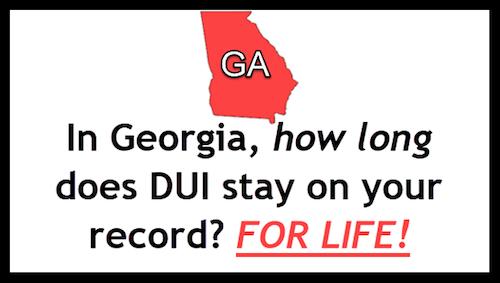
The DUI limit is the sharpest one. A nolo plea does not erase a DUI under Georgia's DUI statute and it does not keep the case from counting in a later proceeding.

Is a nolo contendere plea a conviction in Georgia?
In most Georgia courts, yes. The plea results in a conviction on the criminal history record. It changes some collateral consequences, such as points on a driving record, but it does not make the charge disappear.
Does a nolo contendere plea go on your record?
Generally yes. The plea appears on the criminal history record and stays visible to employers and licensing boards running a background check. Clearing it takes a separate record restriction remedy, and eligibility depends on the charge.
Does pleading nolo affect your car insurance?
It can. Avoiding points on a driving record does not hide the case from an insurer. Carriers generally see the disposition and price from it, so any rate change depends on the carrier and the offense.
Can you plead nolo contendere to a DUI in Georgia?
Rarely. Georgia law sets strict conditions on a nolo plea in a DUI case, and judges grant very few of them. A nolo plea also does not erase the DUI or keep it from counting later.
What is the difference between an Alford plea and a no contest plea?
An Alford plea is a guilty plea entered while the defendant maintains innocence. A no contest plea neither admits nor denies the charge. In Georgia, an Alford plea may be used against the defendant in a later civil case, while a nolo plea generally may not.
A nolo plea is a tool, not a strategy. Before recommending one, a Georgia defense attorney generally weighs several things.
The first is the strength of the state's evidence. A weak case may be worth fighting rather than resolving. The second is the consequence attached to the charge, including license status, commercial driving privileges, and immigration exposure, any of which can outweigh the plea's benefit.
The third is whether a civil suit is likely to follow. A collision case changes the calculation, because a Georgia nolo plea generally cannot be used as an admission in that suit. The fourth is timing, since a driver who has used a nolo plea recently will usually not get another one.
The last is the courtroom. Judges differ on when they will take the plea, and what one court allows in a traffic case another may refuse. Counsel who appears in the assigned court regularly can say what usually happens there, though no plea is certain until the judge accepts it.
A plea entered at arraignment or a calendar call is difficult to withdraw later. The nolo option usually has to be raised before the plea is taken, not after the court has moved on. That timing is why people search for nolo lawyers near me the week a court date lands. If you cannot afford counsel, the United States Constitution guarantees a free lawyer when jail time is on the table, so ask the court about appointed counsel before you enter any plea.
Kohn & Yager LLC offers a free consultation to review the charge, the court, and the plea options that may apply. Call before your next court date, while the choice is still open. Outcomes depend on the facts of each case, and no attorney can promise a particular result.