TOP-RATED
Atlanta Criminal Defense
Law Firm
Atlanta Criminal Defense
Law Firm





A property seizure lawyer defends people whose cash, cars, homes, or other assets were taken by police through civil forfeiture. In Georgia, you usually have just 30 days from the date you get the seizure notice to file a verified claim under Georgia's civil forfeiture procedure. Miss that window, and the government keeps your property by default. At Kohn & Yager LLC, we fight these cases across Georgia and move fast to protect your rights before the deadline passes.
When property is seized by police, the government files a civil action against the property itself, not against you as a person. This means the state can take your cash, your car, or even your home without ever charging you with a crime. The case caption might read "State of Georgia v. $12,500 in U.S. Currency" rather than naming any individual. This legal trick lets prosecutors use a lower burden of proof than criminal cases require.
Civil asset forfeiture has deep roots in federal drug policy. Congress expanded forfeiture laws in the 1980s to target drug trafficking rings. By 2014, deposits into the federal forfeiture fund topped $4.5 billion a year. Most of those forfeitures never came with a criminal conviction.
These forfeiture laws spread to every state, including Georgia. Police agencies often keep a large share of the money, which gives them a reason to seize more. Local police can hand seized property to federal agencies through an "equitable sharing" program. They get back up to 80% of the money. That route skips stricter state protections.
If your property has been seized, the clock is already running. Knowing the process and your options is the first step toward getting it back.
Georgia law enforcement can seize your property under several circumstances. Georgia's Uniform Civil Forfeiture Procedure Act gives officers broad power to take cash, cars, real estate, and other assets they believe are tied to crime.
The most common seizure scenarios include:
Many people do not realize that police can seize property without filing criminal charges. The government can pursue civil forfeiture on its own. You may never be arrested, indicted, or convicted. Yet the state can still try to keep your property for good.
We represent Georgia clients whose cash was seized during I-75 and I-85 traffic stops. We have recovered funds by challenging the officer's probable cause under Georgia's civil forfeiture procedure. Many of these stops involve shaky searches that would not hold up in court.

The U.S. Supreme Court's decision in Timbs v. Indiana, 139 S. Ct. 682 (2019), now adds another layer of protection. That ruling confirmed the Excessive Fines Clause applies to state and local governments. If the property's value is wildly out of line with the offense, the forfeiture may violate your constitutional rights.
Getting seized property back in Georgia follows a set legal process. Each step has deadlines that can cost you your rights for good. Here is what to expect.
After the seizure, the government must send written notice describing what was taken and why. Once you receive this notice, you have 30 days to file a verified claim. This claim must be sworn under oath and filed with the court.
Miss the 30-day deadline, and the property is almost always forfeited by default. The court simply hands ownership to the government without a hearing. That is the single biggest reason to call a property seizure lawyer right after a seizure.
File your claim on time, and the case moves toward a hearing. Georgia's forfeiture law shifts the burden back and forth. The state must first show probable cause that the property is tied to crime. If it does, the burden shifts to you. You must then prove the property should not be forfeited, or that you are an innocent owner.
This framework differs from criminal cases. In criminal cases, the government must prove guilt beyond a reasonable doubt. In civil forfeiture, the bar is lower. That is why a skilled lawyer matters so much.
After the hearing, the court may order one of several results:
We also handle cases where federal task forces adopt Georgia seizures into federal forfeiture proceedings. Those claims fall under federal forfeiture rules, which have their own deadlines. Our firm handles both state and federal forfeiture claims to make sure nothing falls through the cracks.
A stolen property lawyer handles two related situations. One is defending criminal charges. The other is helping rightful owners get their things back.
Under Georgia's theft by receiving statute, it is a crime to receive, sell, or keep property you know or should know was stolen. Prosecutors often bring this charge even when the person had no idea the property was stolen. This type of theft can be charged as a misdemeanor or a felony depending on the property's value. Property worth more than $1,500 is usually charged as a felony. That carries one to ten years in prison.
An attorney for stolen property charges will dig into whether the state can prove you knew the property was stolen. Lack of knowledge is a strong defense. How you got the item, the price you paid, and whether you have paperwork all matter.
If your property was seized as evidence in a criminal case, you may need legal help getting it back. This applies whether you are the victim or a third party. After the case closes, Georgia law provides a way to petition for return of property held by police.
A criminal deprivation of property lawyer can file the right motion and show proof that you own the property. Courts usually order property returned once it is no longer needed as evidence. But the process takes proper filings and sometimes a hearing. Without a lawyer, these petitions often sit for months.
A property seizure lawyer weighs several defenses during the first case review. Every forfeiture case turns on its facts. These are the most common defenses in Georgia courts.
Innocent owner defense. Under Georgia's innocent owner provision, you can beat forfeiture by proving you did not know about the illegal activity tied to the property. Proving you took real steps to stop it works too. This defense protects parents whose adult kids allegedly used the family home for crime. It also protects car owners whose cars were used without their knowledge.
Lack of probable cause. The state must show probable cause linking your property to crime. If the link rests on an officer's hunch instead of hard facts, the forfeiture may fail.
Disproportionate forfeiture. Following Timbs v. Indiana, seizing a $50,000 car over a minor drug offense may be an excessive fine under the Eighth Amendment. Georgia courts must now weigh whether the forfeiture fits the alleged offense.
Procedural defects. The state must follow strict notice rules. If the government sent bad notice, served it late, or described the property wrong, the case may be thrown out on procedural grounds.
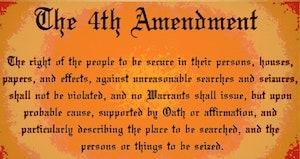
Fourth Amendment suppression. If the underlying stop, search, or seizure violated your constitutional rights, the property should never have been taken. Getting the search evidence thrown out can unravel the whole forfeiture case.
Depending on the facts, the criminal defense attorneys at Kohn & Yager LLC may raise one defense or blend several. We know the forfeiture process in Fulton, DeKalb, Cobb, and Gwinnett County courts. We also know how local prosecutors tend to handle these cases.
The 30-day deadline to contest a civil forfeiture in Georgia is unforgiving. Once that window closes, you may lose your property for good with no second chance. Every day you wait cuts the time your lawyer has to dig into the seizure, gather evidence, and file a verified claim.
Kohn & Yager LLC offers a free consultation to review your forfeiture case. We have extensive experience defending clients across Georgia, built over decades. We know how to challenge illegal seizures and fight to get your property back. We are available 24 hours a day, 7 days a week.
Call (404) 567-5515 now or use our online contact form to schedule your free, confidential case review. Do not let the deadline pass.

You usually have 30 days from the date you get the seizure notice to file a verified claim. Miss it, and the court will likely enter a default judgment. The government then keeps the property. Talk to a lawyer as soon as you can after a seizure.
Police in Georgia can seize your property without filing criminal charges against you. Georgia's civil forfeiture laws allow the government to file an action against the property itself, not against you personally. The state does not need to charge you or win a conviction. That is one of the most disputed parts of civil forfeiture nationwide.
Criminal forfeiture happens as part of a criminal case after a conviction. Civil asset forfeiture is a separate case filed against the property. It needs no criminal charge or conviction, and it uses a lower burden of proof.
Costs depend on how complex the case is and what the property is worth. Some lawyers take forfeiture cases on contingency – you pay only if your property comes back. Kohn & Yager LLC offers a free initial consultation to discuss your options.
You can recover seized cash even without a conviction. If you file a claim on time, you can show the cash is not tied to crime. You can also show that you are an innocent owner. The court may then order the return of your funds. The outcome depends on the facts and the strength of the government's evidence.