TOP-RATED
Atlanta Criminal Defense
Law Firm
Atlanta Criminal Defense
Law Firm




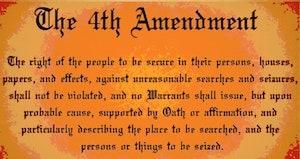
Nearly every case under Georgia drug possession laws starts with one thing: contact with police. Through that contact, our clients have been found to possess illegal drugs in Georgia. Drug crimes under federal law are far less common than violations of state laws set by the Georgia Controlled Substances Act. One common form of this first-tier contact is the knock and talk. This means an officer (without a warrant but working on a "tip") knocks on an individual's door. If the door opens, the officer will ask for consent to come in "to talk."
The first thing to know about a drug possession charge in Georgia is this: you have the right to refuse a search. You may refuse a search of your car, your home, or your business. Without your consent, an officer generally needs a warrant or probable cause under a recognized exception to the warrant requirement. The landmark case Terry v. Ohio from the United States Supreme Court "frames" these laws.
The second type of encounter is a "tier two" encounter. This is an investigatory detention such as a traffic stop, and it is the tier that requires reasonable articulable suspicion of criminal activity. During a traffic stop, a police officer might smell or see evidence of an illegal drug. This can add a drug charge to the less serious traffic ticket.
The third type of encounter is a "tier three" arrest or full search. That tier takes probable cause rather than suspicion – here, probable cause to believe illegal drugs are present. The officer requests a warrant. The written terms of that warrant and its "scope" must authorize officers to search the areas covered by the judge's warrant.
What is reasonable articulable suspicion? Under the Fourth Amendment, a police officer must point to specific, observable facts. Not a gut feeling or vague hunch. The officer must show facts suggesting that criminal activity may be underway. These are the legal grounds needed to stop someone. The United States Supreme Court established this standard in Terry v. Ohio, 392 U.S. 1 (1968). Georgia appellate courts apply Terry in traffic stops and pedestrian encounters alike. An officer must describe concrete reasons for the stop. If those reasons do not hold up, the entire encounter – and every piece of evidence that followed – may be subject to suppression.
The reasonable articulable suspicion definition matters in many Georgia drug possession cases. Some sources flip the word order, but the articulable reasonable suspicion definition means the same thing. The first thing a defense lawyer checks is whether the officer had articulable suspicion to start the encounter. A traffic stop for a broken taillight is clear cut. A stop on foot because someone "looked nervous" is far weaker. Defense lawyers attack that gap in pre-trial suppression motions. They ask the judge to throw out the evidence an unlawful stop produced. On a motion to suppress evidence, Georgia law puts the burden of proving the search and seizure were lawful on the State, and the judge hears that evidence outside the presence of the jury.
Consent matters just as much. A police officer may walk up and speak to a citizen without having reasonable articulable suspicion. During that voluntary encounter, no Georgia statute requires you to identify yourself or to answer any questions. Giving an officer a false name, address, or date of birth is a separate misdemeanor, and a driver stopped in a vehicle must still display a license on request. You have the right to refuse a search of your vehicle, home, or person.
One warning: the smell of marijuana can turn a voluntary encounter into something far more serious. If an officer smells raw or burnt marijuana coming from your vehicle, Georgia courts have held that odor may supply probable cause to search it without your permission. A home is different: probable cause alone does not let officers in, so they still need a warrant or an emergency. By the time the smell reaches the officer, your right to refuse may no longer apply.
If you open your door during a knock-and-talk and invite an officer in, you have given consent. Once inside, the officer will scan the room for evidence of a drug crime in plain view. Drug paraphernalia or a controlled substance in plain sight may be all the officer needs. That can be enough to widen the search and put you in handcuffs.
Winning a pre-trial suppression motion can be the turning point in a drug case. If a judge finds that police violated the Fourth Amendment or Georgia's constitutional protections, the evidence from that illegal search cannot be used at trial. Without that evidence, the State often cannot move forward.
If you are charged with drug possession in Georgia, your lawyer will go through every detail of the arrest. They will review what the officer saw, what was said, whether you gave consent, and whether the warrant was valid. These details decide whether the evidence holds up or falls apart. A free consultation is the first step toward learning how these defenses fit your case.
Georgia has several types of possession charges. Simple possession means holding the drug for your own use. Possession with intent to distribute does not require a completed sale – the State only has to prove you held the drugs intending to pass them to someone else.
Possession with intent to distribute depends on the quantity. It also depends on how the drugs were packaged and whether they were split into small bags. Officers often look at what else was found near the drugs. These include scales, cash, and logbooks. These items help show whether someone is selling drugs, and who the buyers are.
If you face either type of charge, talk with a Georgia drug possession attorney. A lawyer can work to reduce the charge. Even simple possession can carry penalties that follow you for years. Possession with intent to distribute is a much more severe charge overall.
The line between simple possession and a drug sale charge is thinner than most people realize. Under the Georgia Controlled Substances Act, selling or distributing drugs – or holding them with intent to distribute – usually carries much harsher felony penalties than possession for personal use. The difference can mean years of extra prison time.
Prosecutors upgrade a possession charge to a sale charge based on the evidence around it. They look for amounts larger than a person would keep for personal use. Drugs split into small bags suggest they were packaged for sale. Scales, large amounts of cash, and texts about deals all weigh on that choice. So does testimony from informants or undercover officers.
A drug sale lawyer knows both sides of this equation. On one hand, a drug sale lawyer knows the evidence patterns the State relies on to build a sale case. On the other hand, a seasoned lawyer knows the suppression defenses that exist. They include attacking whether the traffic stop or search was legal. They include attacking the chain of custody for the seized drugs. They include testing how reliable an informant is. These defenses can break a sale case apart before trial.
The first talk with a drug sale lawyer should cover the arrest in detail. What did you say to police? Was a search warrant involved, or did officers claim consent or probable cause? Were you in a car or at home? The answers shape the entire defense strategy.
Kohn & Yager LLC handles drug possession, intent-to-distribute, and drug sale cases across metro Atlanta and surrounding Georgia counties.
Holding drugs without a prescription can bring a charge of illegal possession. Possession of one ounce or less of marijuana is a misdemeanor carrying up to 12 months and a fine the statute caps at $1,000, while possession of more than an ounce is a felony punishable by one to ten years. Possession of any other controlled substance is generally a felony. There is a separate misdemeanor offense for keeping lawfully prescribed drugs not in their original container.
Georgia classifies controlled substances into five schedules under controlled substance schedules. Schedule I substances have a high potential for abuse and no accepted medical use. Schedule II substances also carry a high abuse potential. They have some accepted medical uses, often with severe restrictions. Schedules III through V carry lower abuse potential and broader medical uses. The schedule of the drug in your case directly affects how serious the charge is and what penalties you face.
Under Georgia law, drug possession penalties scale with both the drug's schedule and the quantity involved. Possession of a Schedule I substance or a Schedule II narcotic is punished based on weight thresholds. Possession of less than one gram of a Schedule I solid substance carries imprisonment of not less than one nor more than three years. At least one gram but less than four grams carries one to eight years, and at least four grams but less than 28 grams carries one to fifteen years. Above those weights the case moves into trafficking under a separate Code section – and for heroin, morphine, and opium, trafficking starts at just four grams. Possession of Schedule III, IV, or V substances carries imprisonment of not less than one year nor more than three years, rising to one to five years on a third or subsequent conviction.
Selling or distributing a Schedule I or II substance carries imprisonment of not less than five nor more than thirty years. A second or subsequent offense raises that range to not less than ten nor more than forty years or life imprisonment.
Beyond prison time, a drug conviction can bring added effects that follow you for years. These may include difficulty finding employment, professional licensing problems, and immigration consequences for non-citizens. Georgia no longer suspends a driver's license for a controlled substance conviction standing alone; that suspension now follows a conviction for driving under the influence of a controlled substance or marijuana.
What turns a drug case into drug trafficking in Georgia is weight, not packaging or prior record. Trafficking begins at 28 grams of cocaine, 28 grams of methamphetamine or amphetamine, four grams of heroin, morphine, or opium, and more than ten pounds of marijuana. Each tier carries a mandatory minimum prison term and a mandatory fine set by the statute – ten years and $200,000 at the lowest cocaine tier, five years and $50,000 at the lowest heroin tier, and five years and $100,000 at the lowest marijuana tier. A judge may sentence below a mandatory minimum only in the narrow circumstances the statute lists, or where the prosecutor and the defendant agree to a lower sentence. Selling drugs within 1,000 feet of a school is a separate felony rather than trafficking; a first conviction carries up to 20 years, and that sentence must be served consecutively to any other sentence.

Anyone facing drug charges in Georgia should consult with a drug possession attorney. A lawyer can weigh the exact facts of the case. They can explain how the charges, the drug schedule, and the weight tiers apply. Our page on Georgia marijuana trafficking walks through the weight tiers behind a trafficking charge.
Getting a lawyer early matters in drug cases. Evidence can fade or disappear. Witnesses get harder to find. The window for early talks may close. A lawyer who gets involved early can read the police report. They can test whether the stop and search were legal. They can start building a defense before charges are final. Bond issues are also easier to handle with a lawyer involved from the start. That includes release conditions and a possible change to the bond.
Kohn & Yager LLC offers free consultations to people facing drug possession, intent to distribute, and drug sale charges. During that consultation, a lawyer will review how the arrest happened. They will discuss what was said to police. They will check whether a search warrant or consent problem exists in your case.
Our Atlanta drug crime lawyers handle drug defense cases across metro Atlanta and nearby counties, including Fulton, DeKalb, Cobb, Gwinnett, Douglas, Forsyth, and Henry counties. Every case is different, and results depend on the facts of that case. No attorney can guarantee a particular outcome.
Contact Kohn & Yager LLC to set up a free consultation. A defense lawyer can explain how the firm may be able to help after a drug arrest in Georgia.

Reasonable articulable suspicion is the legal standard for an investigative stop. It requires a police officer to point to specific, observable facts that suggest criminal activity. The United States Supreme Court established it in Terry v. Ohio. In Georgia drug stops, the officer must explain concrete reasons – not a hunch – for pulling you over or detaining you. If the officer cannot articulate those facts, the stop may be unlawful, and the evidence found during it could be suppressed.
You need a drug sale lawyer when prosecutors allege that you sold, distributed, or intended to distribute a controlled substance. You do not need one for simple possession. Sale and distribution charges under Georgia law carry much longer prison terms than simple possession. If police found drugs split into small bags, scales, large amounts of cash, or texts about deals, a drug sale lawyer can review the evidence. The lawyer can challenge whether it really supports a sale charge.
It depends on the substance. Possession of one ounce or less of marijuana is a misdemeanor. Possession of any other controlled substance – including cocaine, methamphetamine, heroin, and prescription drugs without a valid prescription – is generally a felony under Georgia law. Felony penalties vary with the drug's schedule and the weight involved.
Yes, in many cases. The odor of raw or burnt marijuana may give an officer probable cause to search a vehicle without a warrant and without your consent. This exception to the warrant requirement has been upheld by Georgia courts. If an officer smells marijuana, refusing consent may not stop the search.
Exercise your right to remain silent – no Georgia statute requires you to answer an officer's questions. Do not consent to any searches. Do not discuss your case with anyone other than your lawyer. Contact a Georgia drug possession defense lawyer right away. They can review your arrest and start building a defense. Getting a lawyer in early can make a real difference in your case.