TOP-RATED
Atlanta Criminal Defense
Law Firm
Atlanta Criminal Defense
Law Firm





In plain terms, obstructing an officer means knowingly and willfully hindering, delaying, or resisting a law enforcement officer who is lawfully carrying out official duties. Georgia brings this obstruction of an officer charge under a single statute. People who search for what is obstructing an officer are usually asking about that one statute. It sets out both the misdemeanor and the felony version of the offense.
The statute protects more than patrol officers. Protected officials include police officers, prison guards, jailers, and correctional officers. The list also covers community supervision officers, probation officers, and game wardens. The officer must be in the lawful discharge of official duties, and that requirement does real work in these cases.
Many people assume the obstruction charge meaning is limited to fighting an officer. That view is wrong. Anyone asking what does obstructing an officer mean in daily practice should start there. An obstructing charge can rest on words alone. Giving a false name can support it. So can running from a lawful detention. Refusing to follow a lawful command may also count. Whether conduct qualifies depends on the facts of the encounter.
The obstruction police meaning that most Georgia defendants ask about is broader than the word suggests. An officer does not have to be hurt. The officer does not even have to be touched. The state only has to show that the person knowingly and willfully got in the way of lawful police work.

A false report that sends officers to an address is a separate Georgia offense, and our guide explains what swatting means. Georgia law also protects first responders who are not police. A separate charge covers obstructing a firefighter in the performance of official duties. Obstructing an emergency medical technician or other emergency medical professional is a separate crime as well.
Related offenses often appear on the same accusation or indictment. Giving a false name, address, or date of birth to an officer is a separate crime. Someone who destroys evidence or hides it during an encounter may face a tampering with evidence count. Officers have wide leeway to allege obstruction. The conduct described in a report may look very different on video.

Searchers use several names for the same Georgia charge. Some look for resisting or obstructing an officer. Others search for obstructing a peace officer. Georgia handles all of that conduct in one place. The formal name of the offense is willful obstruction of law enforcement officers.
Georgia does not charge resisting arrest under a separate statute of that name. The obstruction statute itself reaches a person who resists, obstructs, or opposes a protected officer in the lawful discharge of official duties. So the case against someone who pulled away during handcuffing and the case against someone who walked off mid-stop both travel under the same section. The violence allegation is usually what separates the misdemeanor from the felony.
The statute also does not use the phrase "peace officer." It names specific categories instead, including law enforcement officers, jailers, correctional officers, community supervision officers, probation officers, and game wardens. The everyday phrase and the statutory list overlap, but the list is what the state must prove. An accusation that fails to place the alleged victim inside one of those categories has a problem.
Federal cases work differently. Interfering with a federal officer or agent is prosecuted under federal law on assaulting or impeding federal officers, not under Georgia's obstruction statute. Those cases proceed in U.S. District Court, where the sentence depends on whether the conduct was a simple assault or involved physical contact, a weapon, or injury. The elements, the sentencing rules, and the procedure all come from the federal side.
The key question in these cases is simple. Did the state charge the offense as a misdemeanor or a felony? In Georgia, that line usually turns on one issue. The issue is whether the accused offered or did violence to the officer. Sentencing also depends on prior record, the county, and the facts. Judges keep broad leeway within the statutory range. A fine and jail time do not capture the full cost. A conviction creates a criminal record. That record shows up in job and housing background checks. Non-citizens may face immigration consequences. Licensed professionals could face review by their licensing board.
Non-violent obstruction is a misdemeanor under Georgia law. The charge carries up to 12 months in jail. The fine can reach $1,000, and Georgia law sets a mandatory minimum fine of $300 for any obstruction conviction. Common Georgia examples include walking away from an officer during a lawful stop. Refusing a lawful order to stop or to step out of a car also counts. Giving a false name can bring this charge. So can stepping in while a friend or family member is being arrested. Arguing over an officer's orders at a traffic stop may lead to the same result. First-time misdemeanor cases may be candidates for a pretrial diversion program where the prosecutor offers one. A negotiated reduction is also possible. Options vary by county and prosecutor.
Under Georgia law, the offense becomes a felony in two situations. The main one is where the person knowingly and willfully resists, obstructs, or opposes an officer by offering or doing violence. A first conviction carries one to five years in prison. A second conviction under that subsection carries two to ten years, and a third or later conviction carries three to 15 years. The statute also makes it a felony punishable by one to five years to throw or expel blood, urine, feces, vomitus, or seminal fluid on or at a protected officer. Offering violence is a low bar, and often a subjective one. Pulling an arm away during handcuffing may be enough. So can tensing up, kicking inside a patrol car, or flailing during a takedown. Georgia prosecutors often charge these acts as felony obstruction. That happens even when the officer walks away unhurt. A prison sentence is on the table once the state alleges violence, which is why this line drives most plea talks. A felony conviction may cost a person the right to own a gun. The record also follows the person through hiring decisions.

To convict, the prosecutor must prove several elements beyond a reasonable doubt. First, the person involved was an officer or another official the statute protects. Second, the officer was engaged in the lawful discharge of official duties. Third, the defendant knowingly and willfully hindered, delayed, obstructed, or resisted. For felony treatment, the state must also prove the defendant offered or did violence. The lawful discharge element is where many obstruction cases are won. An officer acting without lawful authority is not lawfully discharging official duties. Suppose the stop, detention, or entry into a home was unlawful. The foundation of the charge then weakens. Suppression issues and obstruction defenses often travel together. The knowingly and willfully element does real work too. Georgia appellate courts have drawn a line between criminal obstruction and lesser conduct. Mere words may not satisfy the statute. Neither may questioning an officer or passive non-cooperation. Asking why you are being stopped is not a crime. Flight is treated differently. Running from a lawful detention often supports an obstruction count under Georgia law. These elements turn on facts. Two encounters that look alike can end differently. The recordings and the exact commands given all matter.
Clients often ask us: is obstruction a secondary charge? In Georgia, the answer is usually yes. The state often files obstruction as an extra count next to a main offense. The charge rarely stands alone. Obstruction most often rides along with DUI, disorderly conduct, and public drunkenness. Family violence battery, drug possession, and fleeing or attempting to elude are also common. In many arrests, the obstruction count grows out of later events. The trouble starts after the officer decides to make an arrest. In larger multi-defendant prosecutions an obstruction count can also appear inside a racketeering indictment, and our guide to what is the RICO Act explains how the state builds those cases. This pattern is not always a sign of bad faith by officers. The practice is built into how cases get made and settled. An extra count gives the state leverage in plea talks. The count also serves as a fallback if the lead charge runs into evidence trouble. That fallback surprises people. An obstruction count can survive even when the main charge is dropped or reduced. A breath test problem may sink a DUI. The obstruction count can still move forward on its own facts. The strategic point follows. A secondary obstruction count deserves the same defense attention as the lead charge. The count carries its own penalties. A conviction on it creates its own record. Our firm defends criminal charges in Georgia state and superior courts. Obstruction counts are often the last charge on the table in plea talks. Sometimes that count decides whether a case ends as a misdemeanor or a felony.
So when people ask is obstruction a secondary charge, the better question is whether it is a dependent one. It is not. An obstructing charge rests on its own elements, and those elements have nothing to do with whether the driver was impaired or the search found drugs. A prosecutor who dismisses the lead count may keep the obstruction count and try it on the officer's account of the encounter alone. Treat the add-on count as its own case from the first court date.
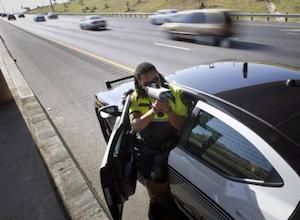
Georgia courts see the same fact patterns again and again. The obstructing police officer examples below are grouped by the kind of conduct the state alleges. None of them describe a specific client matter. They show where charging decisions in these cases usually come from.
Verbal conduct. Giving a false name, address, or date of birth is the classic example, and Georgia treats it as its own offense as well. Giving false information about your identity during a stop falls in this group. So does refusing a lawful command, such as an order to step out of a car or stay on the sidewalk. Words and refusals alone can support a misdemeanor count when the state proves the conduct was knowing and willful.
Physical conduct without violence. Walking away from an officer during a lawful stop is common. So is pulling an arm back during handcuffing, going limp, or bracing against a car door. These counts often turn on a few seconds of body camera footage and on what the officer said just before the movement.
Conduct the state calls violent. Kicking, striking, pushing, or threatening an officer moves the case toward felony treatment under Georgia's obstruction statute. Prosecutors read "offering violence" broadly. A reflex during a takedown may get charged the same way as a deliberate strike, which is why frame-by-frame video review matters so much here.
Third-party conduct. Stepping between an officer and someone else being arrested is its own fact pattern. So is pulling at an officer's arm to interrupt an arrest, or crowding a scene after being told to move back. Obstructing a law enforcement officer does not require that the officer was dealing with you in the first place.
Willful obstruction of law enforcement officers examples cut across all four groups. The common thread is proof of intent. Conduct that looks defiant on an incident report often looks like confusion on video.
Defenses depend entirely on the facts. No outcome can be guaranteed. Several theories come up often enough in Georgia cases to be worth knowing.
Across all of these theories, video does the heavy lifting. What the footage shows usually drives the defense strategy. Body camera and dash camera footage often contradict the story in an incident report. Agencies may overwrite recordings on a set schedule. These defenses could depend on how fast counsel moves to preserve them.

People who search for what is a fingerprintable charge in georgia usually want one answer: will this arrest follow me? A fingerprintable charge is an offense that Georgia treats as serious enough to be booked with fingerprints, so the arrest is entered on the state criminal history record that the Georgia Crime Information Center keeps. Georgia's criminal justice information law tells the center to fingerprint and file every felony arrest, a specific list of misdemeanor arrests, and any other offense the Attorney General designates, so the list is not limited to felonies.
Obstruction is prosecuted as a crime, not as a traffic citation. It is a misdemeanor in its basic form and a felony when the state alleges violence to the officer. A felony obstruction arrest is fingerprinted because the statute covers every felony arrest, while misdemeanor obstruction is not on the statute's own misdemeanor list, so whether it is fingerprinted turns on an Attorney General designation and on local booking practice. Defense counsel can confirm how a particular county handled the booking.
This matters because the entry does not disappear on its own when the charge goes away. Georgia law allows a prosecutor to enter a nolle prosequi with the court's consent, and a case can also end in dismissal or acquittal. The arrest record may still appear until the record is restricted or corrected through the proper process. The rules differ depending on how the case ended and on the offense charged.
That is one more reason early defense work matters. The sooner counsel addresses the charge, the more options may remain for both the case and the record it leaves behind.

A few early decisions can shape the whole case. The steps below protect a person charged with obstruction. Defendants should stop discussing the incident with anyone but their criminal defense attorney. Jail calls are recorded. Social media posts about the arrest can end up in a discovery file. Written notes help while memories stay fresh. Useful notes include the time, the location, and the exact commands the officer gave. The names of other people present matter too. Small details fade within days. Finding and saving video quickly also matters. Bystander phone videos may capture the encounter. So may doorbell cameras and nearby business security systems. Many of those systems overwrite footage within weeks. Defendants should ask counsel to send a preservation letter for body camera footage. Retention schedules vary by agency. Some agencies purge recordings that are not flagged for a case. Missing an arraignment or any other court date carries serious risk. Defendants should read their bond conditions closely and follow them. Those terms may include no-contact or reporting rules. The timeline depends on how the state charges the criminal case. Misdemeanor obstruction usually proceeds in state court. Felony obstruction moves through superior court. A grand jury indictment may also be required. Timing varies by county.
Whether an obstruction charge stays a misdemeanor or becomes a felony often depends on timing. Early defense work matters. Video that exists today may be gone next month. The window to preserve it is short. Kohn & Yager LLC defends obstruction, resisting arrest, and related criminal charges in courts across Georgia. That work includes knowing how local prosecutors weigh the violence element. We offer a free, confidential consultation. In that first talk, we will review the incident report. We will listen to what happened in your own words. We will also identify what footage may exist. Court deadlines do not wait. Contact Kohn & Yager LLC today to discuss your case. Past results do not guarantee a similar outcome. Every case depends on its own facts.

Misdemeanor obstruction carries up to 12 months in jail and a fine of up to $1,000, with a mandatory minimum fine of $300. The offense becomes a felony when the state proves the person offered or did violence to the officer. Under Georgia law, a first felony conviction carries one to five years in prison. A second conviction under that subsection carries two to ten years. A third or later conviction carries three to 15 years. Judges keep discretion within those ranges, and the facts drive where a sentence lands.
Obstruction can be either one. Non-violent obstruction is a misdemeanor under Georgia law. The state may allege that you offered or did violence to the officer. In that case, Georgia law treats the offense as a felony. The range runs from one to five years on a first conviction.
Yes, an obstruction charge can arise without any physical contact. Contact is not required for the misdemeanor version. Giving a false name may support the charge. So may running from a lawful detention or refusing a lawful command. Much depends on the facts.
Yes, an obstruction count often survives on its own. Obstruction stands on its own elements. Prosecutors may drop or reduce the lead charge and still pursue the obstruction count. Each count needs its own defense.
Misdemeanor obstruction carries up to 12 months in jail. The fine can reach $1,000. Felony obstruction carries one to five years in prison on a first conviction. Repeat felony convictions carry two to ten years, then three to 15 years.
Running from police often counts as obstruction if the detention was lawful. An unlawful stop changes the analysis. The officer may not have been in the lawful discharge of official duties. That gap could undercut the charge. If the new charge lands while you are already on probation, read our page on the probation violation bond amount a judge may set.
Willful obstruction of law enforcement officers is the formal name Georgia law gives this offense. "Willful" means the conduct was intentional, not accidental. A person who misunderstood a command, panicked, or froze may not have acted willfully. Confusion, a medical episode, or a language barrier can undercut that element. The state must prove the person acted both knowingly and willfully, and that is often where these cases are fought.
Interfering with a federal officer or agent is not charged under Georgia's obstruction statute. Federal prosecutors bring those cases under federal criminal law, and they proceed in U.S. District Court rather than a Georgia state or superior court. Federal law sets a penalty of up to one year where the conduct is only a simple assault, up to eight years where it involves physical contact, and up to 20 years where a weapon or bodily injury is involved. If federal agents were involved in your encounter, tell your attorney early. The court, the procedure, and the sentencing rules are all different.