TOP-RATED
Atlanta Criminal Defense
Law Firm
Atlanta Criminal Defense
Law Firm





A Georgia vehicular homicide charge – what state law titles "homicide by vehicle" – is one of the most serious traffic-based prosecutions a driver can face. The vehicular homicide statute creates two degrees. Each carries different consequences. First degree homicide by vehicle is a felony. It carries three to 15 years in prison. If the driver held habitual violator status, it carries five to 20 years. Second degree homicide by vehicle is a misdemeanor. It carries up to 12 months in custody. It also carries a fine up to one thousand dollars. The degree does not turn on what the driver intended. It turns on which traffic offense the driver committed before the fatal crash. Early legal guidance from a Georgia criminal defense lawyer can shape every stage of your case.
Georgia's homicide by vehicle statute sorts every fatal traffic case into one of two degrees. The degree decides the punishment range.
For a first degree conviction, Georgia law sets a floor of three years in state prison. Judges cannot sentence below it. Under the habitual violator provision, the minimum rises to five years. Second degree cases carry no mandatory minimum. A judge may impose probation, community service, or a suspended sentence for a misdemeanor conviction. No two cases sentence alike. No attorney can promise a particular number.
The total sentence depends on how many people died. When a crash kills more than one person, a judge may stack sentences consecutively. Consecutive sentences run one after the other rather than at the same time. A driver convicted of first degree motor vehicle homicide in a two death case faces a separate three to 15 year range on each count. With habitual violator status, each of those counts carries its own five to 20 year range.
No published Georgia data reports a statewide average for vehicular homicide sentences. Any figure found online may say nothing about a specific case. Sentences vary widely based on degree charged, driving record, victim count, the predicate offense, and the facts of the crash. The statutory ranges above are the only reliable reference point.
A second degree vehicular homicide conviction is a misdemeanor. If the judge orders custody, the driver serves time in a county jail – up to 12 months per victim. A first degree conviction is a felony. The driver serves time in a Georgia state prison facility. The sentence for vehicular homicide at the felony level begins at three years in prison, not jail.
A vehicular homicide sentence includes more than time behind bars. A conviction also brings lasting collateral consequences:
Judges weigh prior driving history, the aggravating facts of the crash, and any negotiated plea. A vehicular homicide sentence depends entirely on the specific facts. Anyone facing charges should discuss their situation with a Georgia criminal defense lawyer.
In Georgia, the most serious form of vehicular homicide is a felony. The State does not have to prove the driver meant to hurt anyone. It must prove the driver committed one of the traffic offenses the statute names. It must also prove that the offense caused another person's death.
Many people search for "aggravated vehicular homicide" or "aggravated vehicle homicide" when looking into Georgia law. No Georgia statute carries either title. The phrase comes from other states' criminal codes. What those states call aggravated vehicular homicide, Georgia prosecutes as first degree homicide by vehicle. The charge applies when a predicate offense like DUI, reckless driving, or hit and run led to the fatal crash.
Georgia's vehicular homicide law names the predicate offenses that support a first degree charge:
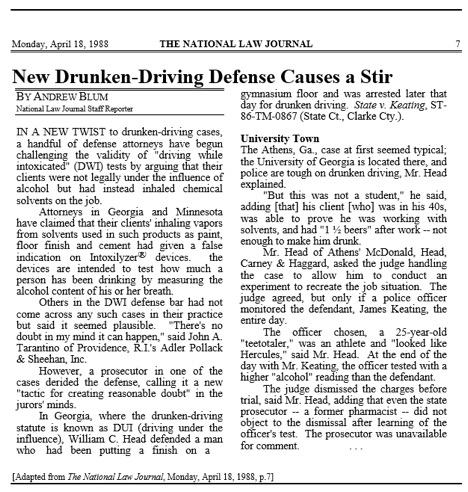
DUI is the predicate offense that drives the majority of first degree vehicular homicide prosecutions in Georgia. When a fatal crash involves alcohol or drugs, the case typically follows a set path. First comes arrest. Then comes chemical testing. Then comes a first degree charge under the homicide by vehicle statute. Drivers are often charged well before lab results arrive. A high blood alcohol result tends to push a sentence toward the top of the three to 15 year range. So does a prior DUI history. So does more than one death.
Accident reconstruction in Georgia superior courts often uses skid geometry and event data recorder downloads. These tools can contest the State's theory on speed and point of impact. Defense challenges to the chemical test itself also play a central role. Chain of custody, calibration records, and blood draw procedures are all subject to scrutiny.

A Georgia driver can be guilty of felony vehicular homicide even without committing one of those predicate offenses. Beyond the predicate route, a driver who has been declared a "habitual violator" faces felony exposure.
In Georgia, a driver receives written notice of habitual violator status. The driver is personally served with the form. The notice documents three or more serious motor vehicle convictions within a five year period. Those convictions are measured by arrest dates, not conviction dates. Qualifying offenses include DUI and child endangerment counts from a single DUI arrest. Also qualifying are hit and run, racing, fleeing or evading a police officer, and homicide by vehicle of either degree. Driving during that five year revocation is its own felony in Georgia. That matters enormously in a fatal crash case.
If a death occurs while the driver's license is still in habitual violator revocation, the case converts to felony exposure. This happens regardless of which traffic offense caused the collision. A rolling stop or a failure to yield would normally be handled by a traffic attorney. These violations would otherwise support only a misdemeanor second degree case. But in habitual violator status, they become a felony.
The sentencing difference is stark. A driver convicted under the habitual violator provision generally faces five to 20 years in prison. Other first degree cases carry three to 15 years. This is the single most common reason a driver's exposure jumps dramatically. No change in the driving conduct itself occurs.

The difference between felony and misdemeanor charges comes down to the predicate driving offenses listed above. The degree of a vehicle homicide charge turns on one simple question: what was the underlying traffic crime that led to another person's death? If the driver committed any other offense under Georgia's motor vehicle title, the resulting charge is second degree homicide by vehicle.
The most important practical difference is custody time. A second degree vehicular homicide conviction is a misdemeanor. It carries up to 12 months in custody and a fine up to one thousand dollars per victim. Neither prison exposure nor a felony conviction follows.
Common violations that produce a second degree vehicular homicide charge include the following. These are: following too closely, failure to yield while turning left, running a stop sign or running a red light, improper lane changes, unsafe merges, and violating Georgia's move over law. Speed-related violations are also common, and the determination of how a driver was speeding often involves examination of the methods used to measure vehicle velocity.
The court level differs too. Felony first degree cases are tried in superior court, usually on a grand jury indictment. Second degree cases are typically handled in state court. They may be handled at the probate court level in counties without a state court. That means a faster docket, a different prosecutor's office, and different plea practices. It does not mean the case is minor. A misdemeanor conviction still creates a permanent criminal record. It also carries a license suspension. Georgia suspends the license of any driver convicted of homicide by vehicle. This applies in first and second degree cases alike.
Georgia does not charge "vehicular second degree murder" as a distinct offense. That terminology comes from states like Tennessee, New York, and Missouri. Those states created specific statutes for fatal crashes involving extreme recklessness. Georgia handles these cases differently.
In most fatal crash cases, prosecutors charge homicide by vehicle. That statute covers deaths caused "without malice aforethought" through a qualifying traffic violation. The key phrase is "without malice." Vehicular homicide is by definition an unintentional killing.
In rare cases, prosecutors may bypass the vehicular homicide statute entirely. The evidence may show malice or extreme recklessness. Under Georgia law, murder occurs when causing the death of another human being while committing a felony, regardless of malice. This is Georgia's felony murder rule.
If a driver uses a vehicle as a weapon, the case could be charged as murder rather than vehicular homicide. If the conduct shows an "abandoned and malignant heart" as described in the murder statute, murder charges may apply.
The practical difference is enormous. A first degree homicide by vehicle conviction carries three to 15 years. A murder conviction carries life in prison, life without parole, or death. These escalated charges are uncommon in traffic fatality cases. They typically arise only when the facts suggest intentional conduct rather than negligence or impairment.
Anyone facing a fatal crash investigation in Georgia should consult a criminal defense attorney. Understanding which charges the evidence may support is crucial.

Second degree homicide by vehicle is a misdemeanor in Georgia. It carries up to 12 months in custody and a fine of up to one thousand dollars for each person killed. Judges often suspend part of that time and impose probation, community service, and driver education instead. The outcome depends on the driver's record and the facts of the crash.
First degree homicide by vehicle is a felony that typically carries three to 15 years in prison per victim. If the driver had been declared a habitual violator, the range generally rises to five to 20 years. Judges may also stack sentences when a crash kills more than one person.
For a first degree conviction, Georgia law sets a floor of three years. The exposure is real. Second degree misdemeanor cases carry no mandatory minimum. Sentences still vary widely depending on the circumstances. No lawyer can promise a particular result in advance.
A reduction is possible depending on the facts. The Georgia offense is unintentional by definition. Prosecutors must prove a qualifying traffic violation. They must also show that the violation caused the death. First degree charges may sometimes be reduced to second degree when the predicate offense is disputed. A reduction may also occur when causation is weak. Second degree charges may sometimes be resolved with reckless driving or a lesser traffic offense. No outcome can be guaranteed. Every case turns on its own facts, and a driver facing these charges should consult a Georgia criminal defense attorney.
No. Georgia law titles the offense homicide by vehicle. Other states use manslaughter language for similar conduct. Some call it involuntary manslaughter. That is why the two terms circulate together online. A driver charged with vehicular manslaughter somewhere else will meet the homicide by vehicle statute here. A Georgia accusation or indictment will cite the homicide by vehicle statute.
No published statewide average exists. Sentences vary by degree, prior record, victim count, and predicate offense. The statutory ranges are the only reliable frame. First degree carries three to 15 years in prison. Habitual violator cases carry five to 20 years. Second degree carries up to 12 months in county jail. Consecutive stacking for multiple victims can multiply these ranges. No website figure can predict what a Georgia superior court judge will impose on any specific set of facts.
No. Homicide by vehicle is a separate offense. It covers deaths caused "without malice aforethought" through a traffic violation. Second degree murder in Georgia means a death caused in the commission of second degree cruelty to children. In rare cases involving extreme recklessness or intentional conduct, a fatal crash could be charged as murder instead of vehicular homicide. The penalties are vastly different. First degree homicide by vehicle carries three to 15 years, while murder can carry life in prison.
When you face a vehicular homicide charge in Georgia, the first days matter more than most people realize. Kohn & Yager LLC is an Atlanta criminal defense law firm that handles felony and misdemeanor vehicular homicide cases statewide. Our attorneys practice in Fulton County and metro Atlanta superior courts as well as courts across Georgia.
Early intervention shapes the defense. Skid marks wash away. Roadway debris is cleared. Witness memory fades within weeks. In metro Atlanta, a specialized traffic fatality unit usually investigates before charges are filed. An independent accident reconstruction expert can contest causation, speed, and point of impact. But only if the physical evidence still exists.
Three steps protect a defense before charges are even filed. First, preserve the vehicle and any dashcam, telematics, or event data recorder information before the car is released. The data can be overwritten. Second, decline to give a recorded statement to investigators or insurers until you have counsel. Third, get a lawyer involved before the case goes to a grand jury. That is often the last point where the charging decision can be influenced.
Kohn & Yager LLC offers a free, confidential case review. We are available 24 hours a day, seven days a week. Call to discuss your vehicular homicide case and learn what to expect from the investigation and court process. Past results do not guarantee a similar outcome, and every case depends on its own facts.

Georgia's criminal code does not use the term "vehicular manslaughter." The offense is titled homicide by vehicle. A driver searching for "second degree vehicular manslaughter" or "2nd degree vehicular homicide" in Georgia is describing what state law calls second degree homicide by vehicle. That is the charge behind a vehicular manslaughter misdemeanor search. It carries up to 12 months in custody and a fine of up to one thousand dollars.
The terms travel together online because states split these offenses differently. Some states reserve manslaughter language for reckless conduct. Others fold every fatal traffic case into one statute with tiers. Georgia chose the homicide by vehicle label with two degrees. The reliable move is to read the charging document. A Georgia accusation or indictment cites the statute by number. If it cites the felony provision, the case is a felony first degree charge. If it cites the misdemeanor subsection, the case is a misdemeanor. The label a police report or a news story uses carries no legal weight.
For context, states that use "vehicular manslaughter" terminology often carry different ranges. Those ranges are set by each state's own code, not by Georgia law. Georgia's first degree homicide by vehicle range is three to 15 years. A habitual violator case runs five to 20 years. Comparing across states is useful background. But the Georgia statute controls any Georgia case.
Drivers facing charges after a Georgia crash should know that the label does not change the exposure. Whether the search term is vehicular manslaughter, motor vehicle homicide, or homicide by vehicle, the Georgia statute and its penalty ranges are the same.
All Georgia vehicular homicide is by definition unintentional. The State never has to prove the driver meant to cause harm. Searching for an "unintentional vehicular manslaughter sentence" does not point to a lighter category of the offense. Every case under the homicide by vehicle statute is unintentional, and the full statutory range applies regardless.
One more Georgia offense is easy to confuse with these two degrees. Serious injury by vehicle applies when the victim survives but suffers serious disfigurement. It applies when the victim loses a body member. It applies when the victim loses the function of a bodily member. Serious injury by vehicle stands as a felony in its own right. It rests on reckless driving, reckless stunt driving, or DUI, or on leaving the scene.
Yes. Accidental vehicular homicide is still a crime in Georgia. This surprises most families. Vehicular homicide in Georgia is by definition an unintentional killing. The State never has to prove that a driver meant to hurt anyone. It must prove two things: that the driver committed a qualifying traffic offense, and that the offense caused the death. An accidental death does not create a defense. Every one of these cases is an accident in the ordinary sense of the word.
Causation is where these cases are typically won and lost. Georgia requires the State to show that the driver's violation was the proximate cause of the fatality. It must not be merely a circumstance present at the scene. That opens real ground for the defense.
Intervening causes matter. They come up often in these cases. The other driver may have run a light or turned across traffic. A sudden mechanical failure may have occurred, including brake or tire failure. A medical event may have taken a driver out of control without warning. Road conditions may have played a role – poor signal timing, obstructed sightlines, or standing water. Reconstruction shows what damage and marks tell us. Crush damage, skid marks, and yaw marks can reveal a different speed than the State claims. Event data recorder downloads can show a different braking sequence. Either can point to a different point of impact than the State's theory assumes.
A genuine accident with no underlying traffic violation may support no criminal charge at all. A civil claim can still proceed on a negligence standard. The burden of proof is lower there. Every case depends on its own facts. A Georgia criminal defense lawyer should review them before anyone draws conclusions.
Related reading: Custodial Interference in Georgia: Charges, Penalties, and Defenses.