- Free Consultation, Call 24/7: (404) 567-5515 Tap Here To Call Us




Drug Law Loopholes in Georgia: What Really Weakens a Drug Case



What People Really Mean by Drug Law Loopholes
There is no secret list of drug law loopholes that makes a Georgia drug charge disappear. Georgia drug prosecutions do fail on a regular basis, but they fail on constitutional and evidentiary grounds that non-lawyers describe as loopholes.
A loophole implies a drafting error in the statute. What actually defeats a drug case is different. The State carries the burden of proving every element beyond a reasonable doubt. When police violate a defendant's rights, or when the evidence cannot carry that burden, the case weakens or ends.
Georgia charges most drug offenses under the Georgia Controlled Substances Act, principally Georgia law. Penalties turn on the drug's schedule and the alleged conduct. Simple possession sits at one end, and sale or possession with intent to distribute sits at the other.
People searching for drug law loopholes are usually asking about four real pressure points: the search, who actually possessed the substance, what the crime lab can prove, and whether diversion is available. Outcomes depend on the specific facts, the county, and the judge.
How Search and Seizure Rules Can End a Drug Case
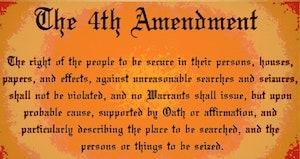
Most perceived loopholes are Fourth Amendment issues. If police obtained the drugs illegally, the defense can ask the court to exclude that evidence. Georgia defendants raise this through a motion to suppress. The motion is filed before trial and argued at a hearing. If the judge suppresses the drugs, the State often has no case left.
A few fact patterns come up again and again.
Prolonged traffic stops. A stop should last only as long as the traffic mission reasonably requires. When an officer holds a driver past the point the ticket was finished, waiting for a K-9 unit to arrive, that extension may be unlawful. Evidence found afterward may fall with it.
Questionable consent. Officers often search because someone said yes. Consent may be challenged when it was ambiguous, when officers pressured the person into it, or when the person giving it had no authority over the space searched.
Warrantless vehicle and home searches. A search without a warrant must fit a recognized exception. If it does not, the defense can argue the search was invalid.
Defective search warrants. A warrant can fail when the supporting affidavit lacked probable cause. Warrants that lean on stale information, or on an unnamed informant with no shown reliability, draw the same challenge.
Suppression is fact-intensive. A judge decides it after hearing testimony, and it is never automatic.
Constructive Possession and the Equal Access Problem
Being near drugs is not the same as possessing them under Georgia law. Actual possession means the substance was on the person, in a hand or a pocket. Constructive possession means the person knowingly had both the power and the intent to control it.
That second category is where cases get soft. The equal access rule matters here. When police find contraband in a car or a home that several people could reach, evidence that others had the same access may undercut the inference that the defendant knew about it.
Drugs turn up in the center console of a shared vehicle. Pills sit in the glove box of a borrowed car. Something is found in the common area of a shared apartment. A passenger gets charged alongside the driver.
In each scenario, the State must still prove knowledge and control. Mere presence, or simple proximity to the drugs, is generally not enough on its own. Prosecutors sometimes charge two or more people with joint constructive possession of the same contraband, which raises that proof problem for each defendant. When the State believes those people worked together by agreement, the case can expand beyond possession into an Atlanta conspiracy charge.
How these principles apply depends on the circumstances, including who owned the car and where exactly the drugs sat.
Crime Lab Testing, Chain of Custody, and Proof Gaps
Laypeople rarely think of lab evidence as a loophole. Defense lawyers litigate it constantly. The State must prove the substance actually is the controlled substance alleged. For weight-driven charges such as trafficking, it must also prove the tested weight.
Roadside field test kits are presumptive only. They carry known false-positive limitations, and a positive field result does not settle what a substance is. Confirmatory testing happens at the GBI crime lab, and backlogs can delay those results. Charges sometimes move forward well before the lab report arrives.
Weight raises a separate question. Georgia drug trafficking thresholds are weight-based, and the total mixture weight can differ from the amount of pure drug involved. What got weighed, and how, may be worth challenging.
Chain of custody matters too. Every transfer of the evidence, from seizure to testing, should be documented. Gaps in that record, or mislabeled packaging, give the defense grounds to challenge admissibility or argue the evidence deserves little weight.
Two other proof issues come up often. A valid prescription may answer a charge involving Schedule II through IV pills under Georgia law. And hand-to-hand buy cases built on one officer's brief observation, or on an informant's word, can raise real identification problems.
Diversion, Conditional Discharge, and First Offender Options
For many people, the practical goal is not winning at trial. It is avoiding a conviction on their criminal record. Georgia offers several routes, though each one is limited.
Conditional discharge applies to certain first-time drug possession cases. The court can place the person on probation without entering a judgment of guilt. If that person completes the conditions, the case may be dismissed without an adjudication of guilt.
First Offender treatment works differently. A defendant sentenced as a first offender who completes the sentence is discharged without a conviction. The flip side is serious. A violation can send the case back for resentencing, up to the maximum allowed for the offense.
Georgia also authorizes drug courts and other accountability courts. These programs trade close supervision and substance abuse treatment for a better outcome. Many counties also run pretrial diversion, and the terms vary by county and prosecutor's office.
Eligibility is limited and discretionary. Prosecutors and judges decide, and for most people it is a one-time opportunity. These routes get negotiated early, which is why the timing of getting a lawyer involved matters.

Speak With a Georgia Drug Charge Defense Attorney
Kohn & Yager LLC is dedicated to Georgia drug crime defense and knows how local Georgia courts and prosecutors handle these cases.
Our firm offers a free, confidential consultation. We will review the stop, the search, and the lab paperwork in your specific case, then explain the options that realistically apply to you.
Timing matters. Suppression motions and diversion applications both carry early deadlines. Dash cam and body cam footage can be overwritten if no one requests it in time.
Bring your citation or accusation, bond paperwork, any incident report, and prescription records if pills are involved. Contact a criminal defense attorney at Kohn & Yager LLC to talk through your Georgia drug charge. Every case is different, and results depend on the specific facts.

Frequently Asked Questions About Georgia Drug Charges
Are There Real Loopholes in Georgia Drug Laws?
Not in the way the word suggests. Georgia's drug statutes do not contain secret escape hatches. What defeats charges are constitutional protections and the State's burden of proof, such as an unlawful search or unreliable testing. Whether any of that fits your situation depends on the facts, so ask a Georgia attorney to review your case.
Can a Georgia Drug Charge Be Dismissed if the Search Was Illegal?
It can, though dismissal is never automatic. The defense files a motion to suppress, and a judge decides after a hearing whether police violated your rights. If the court excludes the drugs, prosecutors may have too little evidence left to proceed. Have a Georgia attorney review the stop and search in your own case.
Can I Be Charged With Drug Possession if the Drugs Were Not Mine?
Yes. A drug possession charge can rest on constructive possession, which Georgia allows when the State claims you knowingly had the power and intent to control the drugs. Prosecutors must still prove knowledge and control, and evidence that others had equal access may weaken that claim. Talk with a Georgia attorney about who else could reach the area.
Do Field Drug Tests Hold Up in Georgia Court?
Field test kits are presumptive, not conclusive, and they carry known false-positive limitations. Prosecutors generally rely on confirmatory testing at the GBI crime lab to prove what a substance is. Test results, weight, and chain of custody can each be challenged. Ask a Georgia attorney to review the lab paperwork in your case.
Can a First-Time Drug Charge in Georgia Be Kept off My Record?
Sometimes. Conditional discharge and First Offender treatment can each resolve a case without a conviction if you complete the terms. Drug court or county pretrial diversion may also be options. Eligibility is limited and discretionary, and a violation can undo the benefit. Ask a Georgia attorney whether you qualify.